Picanha, step by step
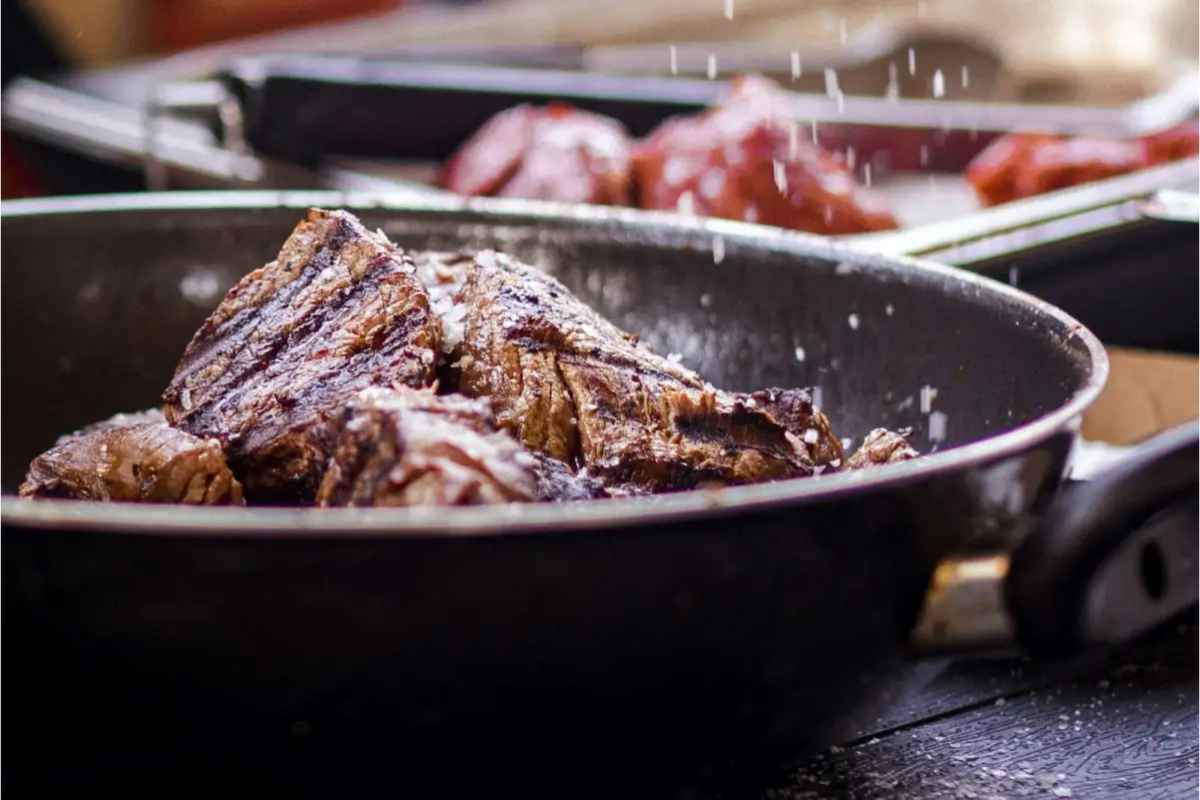
Picanha is the cut many people think of first when they picture a barbecue. It is forgiving, full of flavour and easy to share. It also has one or two details that make the difference between good and very good.
Buying it
Picanha is the cap of the rump, a triangular piece with a layer of fat on one side. Ask your butcher for it by name, or as rump cap or coulotte. A whole picanha usually weighs between 1 and 1.5 kg. Look for:
- A fat cap about 1 to 2 cm thick, white or creamy, along the whole piece.
- A uniform shape without deep cuts; it cooks more evenly.
- Bright red meat with some fine marbling.
Two ways to cook it
As steaks
Cut the picanha into steaks about 3 fingers thick, with the grain. Bend each steak into a C shape with the fat on the outside and skewer it, or lay it flat. Salt with coarse salt right before grilling. Sear over strong direct heat for 3 to 4 minutes per side, then render the fat edge against the grate for a minute.
Whole
Score the fat in a crosshatch without reaching the meat, and salt it generously. Start fat side up on the indirect side of a two-zone fire for 35 to 45 minutes, until the centre reaches about 50 °C (122 °F). Finish over the coals, a few minutes per side, to crisp the fat and colour the meat.
Temperatures
| Doneness | Pull from the grill | After resting |
|---|---|---|
| Rare | 48–50 °C (118–122 °F) | ~52 °C |
| Medium-rare | 52–54 °C (126–130 °F) | ~56 °C |
| Medium | 57–59 °C (135–138 °F) | ~61 °C |
Food-safety agencies such as the USDA recommend a minimum of 63 °C (145 °F) with a 3-minute rest for whole cuts of beef. Many cooks serve picanha below that by preference; decide what is right for your table.
Resting and slicing
Rest whole picanha for 5 to 10 minutes on a board. Then slice it thin, against the grain. Because the steaks were cut with the grain, slicing them across now gives tender pieces with a strip of fat on each.